Car Loans / Credit Score Requirements
What Credit Score Do You Need for a Car Loan?
If you are asking what credit score you need for a car loan, the short answer is that most lenders approve borrowers across multiple tiers, but your score strongly affects your annual percentage rate, down payment expectations, and loan term options. This guide explains common car loan credit score ranges, how auto lenders evaluate applications, and what to do if your current score is not where you want it to be.
Fast Rule of Thumb
A score of 661 or higher often unlocks better auto loan rate offers and broader lender choices.
Approvals Still Happen
Borrowers with fair or poor credit can still qualify, usually with higher APR and stricter terms.
Preparation Pays Off
Improving your credit profile for 30 to 90 days before applying can materially reduce loan cost.
Typical Credit Score Ranges for Car Loan Approval
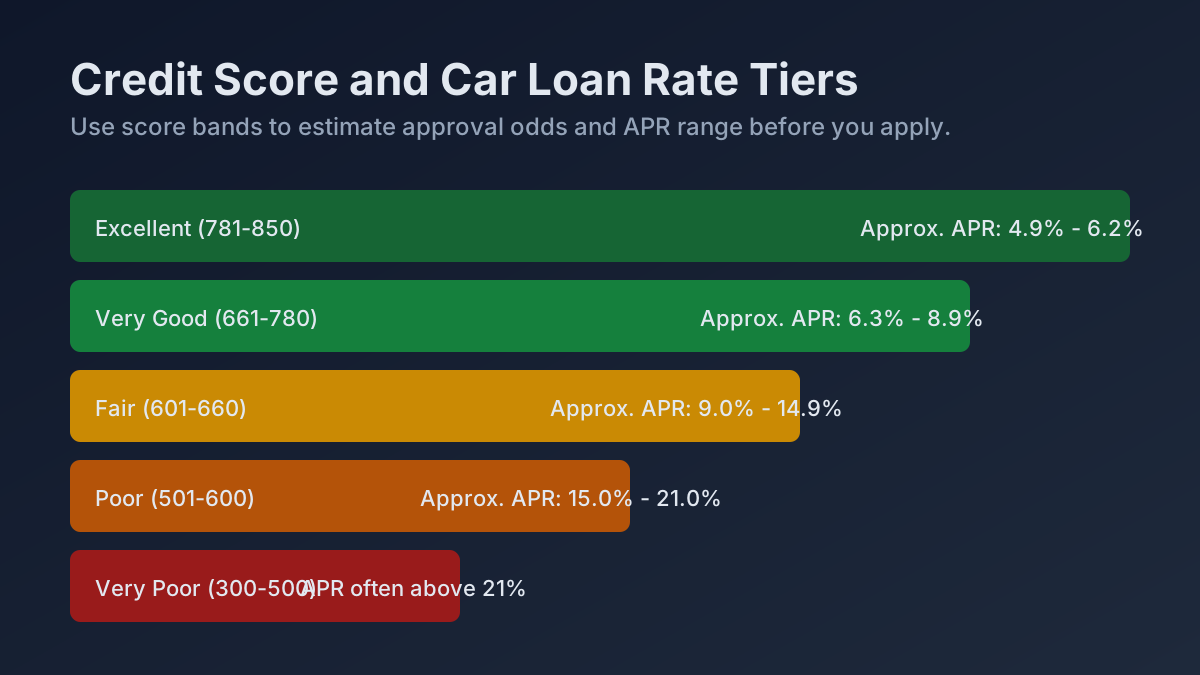
There is no universal minimum credit score for auto financing. Each bank, credit union, or dealer lender sets its own underwriting policy. The table below gives realistic ranges many borrowers see in the market.
| Credit Score Range | Approval Outlook | Rate and Term Expectations |
|---|---|---|
| 781-850 (Excellent) | Very high approval odds | Usually the lowest available APRs and strongest negotiating position. |
| 661-780 (Good to Very Good) | High approval odds | Competitive rates, more lender options, and flexible loan terms. |
| 601-660 (Fair) | Moderate approval odds | Approvals are common, but APR can rise noticeably and term limits may apply. |
| 501-600 (Poor) | Conditional approvals | Higher APR, larger down payment requirements, and tighter vehicle age/mileage limits. |
| 300-500 (Very Poor) | Limited approvals | Specialized lenders may approve with substantial risk pricing and documentation checks. |
What Lenders Consider Besides Your Credit Score
Credit score is important, but approval decisions are multifactor. Auto lenders commonly evaluate:
- Debt-to-income ratio: Lower monthly debt obligations relative to income improve approval strength.
- Loan-to-value ratio: A larger down payment reduces lender risk and can improve terms.
- Payment history: Recent late payments can outweigh an otherwise decent score.
- Employment and income stability: Documented, consistent income supports affordability.
- Vehicle profile: Newer vehicles with strong resale value often receive better financing offers.
How to Improve Auto Loan Approval Odds Before Applying
- Review your credit reports and dispute errors with all major bureaus.
- Reduce revolving balances to lower your utilization ratio.
- Avoid opening new credit lines right before applying.
- Set a realistic budget and target vehicle price first.
- Get prequalified with multiple lenders in a short window.
- Increase down payment to reduce total financed amount.
Related Car Loan Resources
Build a complete borrowing strategy with these guides:
- How Car Loans Work: A Beginner-Friendly Guide
- Car Loan Glossary: 50 Terms Every Borrower Should Know
- Car Loan Calculator and Dealer Offer Comparison
Authoritative External Sources
- Consumer Financial Protection Bureau: Credit reports and scores
- Experian: What credit score do you need to buy a car?
- myFICO: FICO score ranges explained
Frequently Asked Questions
Can I get a car loan with a 600 credit score?
Yes. Many borrowers around 600 are approved, but terms often include higher APR and potentially larger down payment requirements.
Is 700 a good credit score for a car loan?
A 700 score is generally strong for auto financing and often qualifies for lower APR offers than fair-credit tiers.
Does prequalification hurt my credit score?
Most prequalification uses a soft inquiry, which typically does not affect your score. Confirm inquiry type before submitting.
How often should this guide be updated?
Because lender standards and market rates change, review and refresh this page at least quarterly to keep recommendations accurate and relevant.
Ready to estimate your payment?
Use the Car Loan Calculator to test different APR and term scenarios, then compare dealer offers before you commit.